Is Kotlin Multiplatform production ready in 2026?
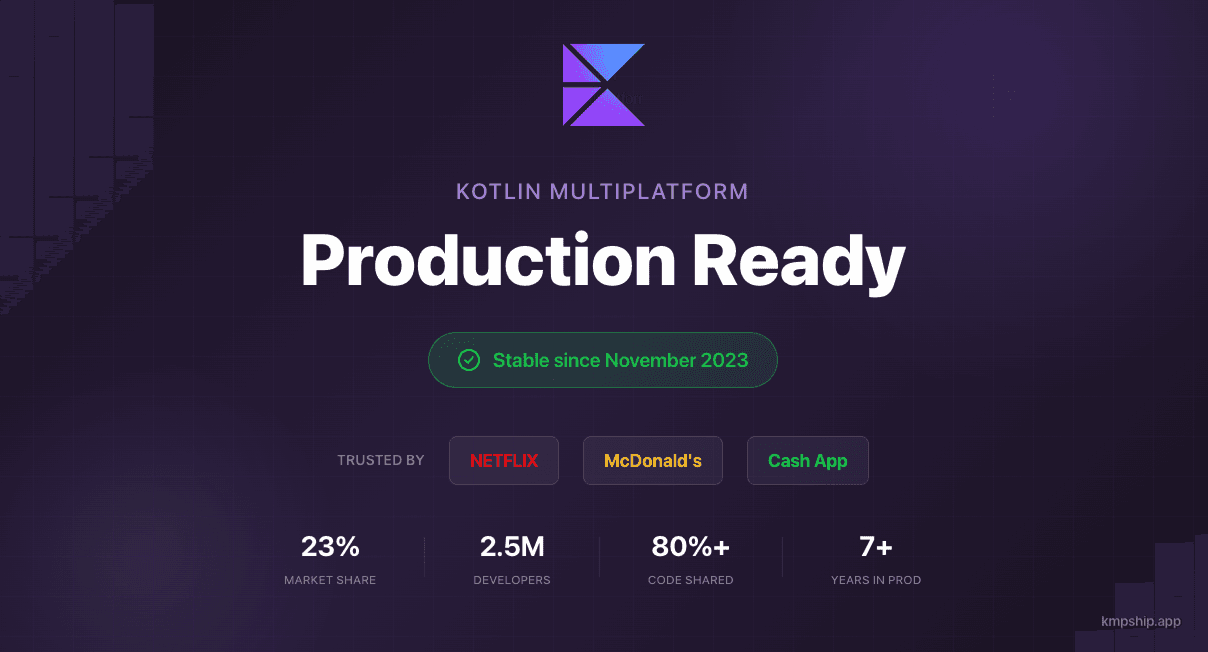
KMP has been stable since 2023, Compose Multiplatform for iOS reached stable in 2025, and companies like Netflix and Cash App run it in production. Here's what's actually stable and what's still maturing.
Posted by
 Vivien Mahé
Related reading
Set up a Kotlin Multiplatform SQLDelight database
Learn how to set up a Kotlin Multiplatform SQLDelight database with CRUD operations, migrations, and platform-specific drivers.
Kotlin Multiplatform image loading with Coil 3 in 2026
Learn how to load and cache images in Kotlin Multiplatform using Coil 3 with this comprehensive guide for Compose Multiplatform.
Kotlin Multiplatform in-app purchases with RevenueCat
Learn how to implement in-app purchases and subscriptions in your Kotlin Multiplatform app using RevenueCat with our step-by-step guide.
The short answer
What's stable in 2026
Kotlin Multiplatform core
Compose Multiplatform for iOS
Android integration
Swift export (experimental but improving)
What's still maturing
Compose Multiplatform for web
Kotlin/Wasm
Companies running KMP in production
Netflix
McDonald's
Cash App
Key statistics
| Metric | Value |
|---|---|
| Market share growth | 12% to 23% (2023-2025) |
| Developer reach | 2.5 million developers worldwide |
| Code sharing | 80%+ between platforms |
| Production track record | Cash App: 7+ years |
When KMP might not be right for you
- Your team has no Kotlin experience and tight deadlines. The learning curve is real.
- You need heavy platform-specific UI with minimal shared logic. The overhead may not be worth it.
- Your iOS team strongly prefers native Swift. KMP works best when both platform teams buy in.
How to adopt KMP in 2026
- Start with shared business logic. Networking, data models, validation, and business rules are the safest starting point.
- Keep UI native initially. Let your teams stay productive while the shared layer proves itself.
- Consider shared UI later. Once Compose Multiplatform fits your needs, you can share UI incrementally.
- Use production-ready tooling. Don't reinvent the wheel for auth, payments, analytics, and CI/CD.
Skip the setup, start building
The bottom line
Continue your KMPShip journey
- Big Tech's Secret Weapon: How Netflix, McDonald's & Cash App Ship Faster with KMP
- Kotlin Multiplatform vs Flutter vs React Native: The 2025 Developer Guide
- How to Set Up Kotlin Multiplatform: Complete Development Guide 2025
- KMPShip pricing: a tier for every stage of your product journey
Sources
- JetBrains Kotlin Blog: KotlinConf 2025 Announcements
- JetBrains: Kotlin Multiplatform Development Roadmap for 2025
- Google Android Developers: Kotlin Multiplatform
- JetBrains: Kotlin Multiplatform Case Studies
- Kotlin Documentation: Real-world Use Cases
Ready to ship faster?
Build your KMP app faster
Skip the setup and start shipping with a production-ready Kotlin Multiplatform starter kit.
